W5-W8. Sequence Limits
1. Theory
1.1 Definition of a Sequence
The core of analysis lies in the concept of limits. Among these, the limit of a sequence of real numbers is the most elementary form. Sequences provide the essential framework for the theory of infinite series as well as for many other mathematical applications.
A sequence of real numbers is a function
Think of a sequence as an ordered list of numbers: first term, second term, third term, and so on, continuing indefinitely. Each position in the list corresponds to a natural number (the index), and each index has exactly one number associated with it.
1.1.1 Examples of Sequences
Sequences can be visualized as points on the real line or as points in a plane where the horizontal axis represents the index number
Some basic examples of sequences:
1.1.2 Ways to Describe Sequences
We can describe sequences in several ways:
By the rule of the
By recursive relation (recursively):
This means defining each term based on previous terms:
1.2 Famous Recursive Sequences
1.2.1 Fibonacci Sequence
The Fibonacci sequence is one of the most famous sequences in mathematics, defined by:
The first terms are: 0, 1, 1, 2, 3, 5, 8, 13, 21, 34, 55, 89, 144, 233, 377, 610, 987, …
Each term is the sum of the two preceding terms. This sequence appears frequently in nature, such as in the arrangement of leaves on a stem or the spiral patterns of shells.
There exists a closed-form expression (Binet’s formula):
where
1.2.2 Lucas Sequence
The Lucas sequence has the same recursive relationship as the Fibonacci sequence, but with different starting values:
The first few Lucas numbers are: 2, 1, 3, 4, 7, 11, 18, 29, 47, 76, 123, 199, 322, 521, 843, …
Closed-form expression:
1.2.3 Pell Sequence
The Pell numbers are defined by:
The first few terms are: 0, 1, 2, 5, 12, 29, 70, 169, 408, 985, 2378, 5741, 13860, …
Closed-form expression:
1.2.4 Triangular Numbers
The sequence of triangular numbers
Recursive formula:
Explicit formula:
The first few terms: 1, 3, 6, 10, 15, 21, 28, 36, 45, 55, 66, 78, 91, 105, 120, …
1.2.5 Square and Pentagonal Numbers
Square numbers represent the number of dots arranged in a square pattern:
This gives
Pentagonal numbers represent the number of dots arranged in a pentagonal pattern:
This gives
1.3 Arithmetic Sequences
An arithmetic sequence is a sequence where each term differs from the previous one by a constant amount called the common difference.
An arithmetic sequence
where
Examples:
- The sequence 2, 7, 12, 17, … is arithmetic with
- The sequence 2, -1, -4, -7, … is arithmetic with
Since each term adds
By induction, the general term is:
More generally:
1.3.1 Sum of Arithmetic Sequence
The sum of the first
This formula says: multiply the number of terms by the average of the first and last term.
Proof:
1.4 Geometric Sequences
A geometric sequence is a sequence where each term is obtained by multiplying the previous term by a constant value called the common ratio.
A geometric sequence
where
Examples:
- The sequence
- The sequence
Since each term is multiplied by
By induction, the general term is:
More generally:
1.4.1 Sum of Geometric Sequence
The sum of the first
Proof:
Let
Subtracting the second equation from the first:
1.5 The Limit of a Sequence
Now we come to one of the most fundamental concepts in mathematical analysis: the idea of a limit. Informally, a sequence has a limit
1.5.1 Intuitive Understanding
Consider the sequence
For large values of
Let’s make this precise. Suppose we want
So if we let
This shows that no matter how small we make
1.5.2 Formal Definition of Convergence
A sequence
If no such number
and refer to
The definition says: a sequence converges to
1.5.3 Examples of Convergence
Example 1: Let
For each
We want this to be less than
Let
Example 2: Prove that
Let
Rationalizing the numerator:
Since
So if we make
Let
Example 3 (Geometric sequence): Let
If
By Bernoulli’s inequality, for any
Let
Therefore:
Setting
Let
This is an important result: any geometric sequence with ratio between -1 and 1 converges to zero.
1.5.4 Example of Divergence
Example: Show that the sequence
Assume, for contradiction, that
Let
Consider both an even and an odd
- For even
- For odd
By the triangle inequality:
This gives
1.5.5 Uniqueness of Limits
Theorem: A convergent sequence has a unique limit.
Proof: Suppose
Since
Similarly, since
Let
Thus
1.6 Types of Convergence
The speed at which a sequence converges to its limit can vary significantly. We classify different rates of convergence:
Let
These classifications help us understand how quickly the error decreases as
1.7 Divergence to Infinity
Some sequences don’t converge to a finite limit, but their terms grow without bound. We have special notation for this:
Definition:
- The sequence
- Similarly,
Intuitively, this means the terms eventually exceed any bound we can set.
Example 1: Prove that
Let
Let
Example 2: Prove that
Let
Note that for any
Therefore:
Setting
Let
1.8 Bounded Sequences
Just as we can have bounded functions, we can have bounded sequences. The concept is simpler since sequences only have integer indices.
Definition:
A sequence
The constant
Alternatively, a sequence
If a sequence is not bounded, we say it is unbounded. This means for any
Important distinction: An unbounded sequence is not the same as a sequence that diverges to infinity. We’ll see an example of this shortly.
Examples of bounded sequences:
Examples of unbounded sequences:
1.8.1 Convergent Sequences are Bounded
Theorem: A convergent sequence is bounded.
Proof: Let
By the definition of convergence with
This means:
Now, let
Similarly, let
Then
Important note: The converse is not true! A bounded sequence need not converge. For example,
1.8.2 Examples of Bounded Sequences
Example 1: The sequence
For any
Thus, 0 is a lower bound and 2 is an upper bound.
Example 2: The sequence
Therefore,
Note that
Example 3: The sequence
For
Therefore:
Thus,
1.8.3 Unbounded Sequences
Example: The sequence
Let
Setting
Therefore, the sequence is unbounded.
1.8.4 Unbounded vs. Divergence to Infinity
It is crucial to distinguish between an unbounded sequence and a sequence that diverges to infinity.
An unbounded sequence does not necessarily diverge to
A sequence diverges to infinity only if its terms become arbitrarily large and remain positive (or negative) for all sufficiently large
Example: Consider
This sequence is unbounded. Indeed,
However, the sequence does not diverge to
The limit
1.9 Comparison Theorems
These theorems allow us to determine the limit of a sequence by comparing it with other sequences whose limits we already know.
1.9.1 Useful Lemma
Lemma: Let
Proof:
(
(
This gives
1.9.2 Comparison Theorem
Theorem: Let
Proof: Let
For any
Let
Thus:
By the previous lemma,
Important remark: We cannot replace non-strict inequalities with strict inequalities. That is, if
Counterexample: Let
Therefore, if we know
1.9.3 Comparison Theorem (Infinite Case)
Theorem: Let
- If
- If
This theorem says: if a smaller sequence goes to infinity, the larger one must too. If a larger sequence goes to negative infinity, the smaller one must too.
1.9.4 Sandwich (Squeeze) Theorem
Theorem (Sandwich/Squeeze Theorem): Let
for all
then:
Proof: Let
Since
Let
Thus:
This means
1.9.5 Examples Using Sandwich Theorem
Example 1: For
Since
Example 2: For
Since
Corollary: An immediate consequence of the Sandwich Theorem is: if
This is because
Example:
1.10 Properties of the Limits (Limit Theorems)
These fundamental theorems allow us to break down complicated limits into simpler ones. They are the workhorses of limit calculations.
Theorem: Let
- Sum Rule:
- Constant Multiple Rule:
- Product Rule:
- Quotient Rule:
1.10.1 Proof of Sum Rule
Proof of Sum Rule: Let
Since
Similarly, since
Let
Therefore,
1.10.2 Proof of Constant Multiple Rule
Proof of Constant Multiple Rule: If
Suppose
Since
Therefore:
Thus,
1.10.3 Proof of Product Rule
Proof of Product Rule: For every
Since
Let
Since
Let
Therefore,
1.10.4 Proof of Quotient Rule
Proof of Quotient Rule: First, we’ll prove that
For any
Since
By the triangle inequality, for any
Let
Let
Therefore,
Finally, for the sequence
1.10.5 Examples
Example 1:
Example 2:
Example 3:
1.10.6 Important Remarks
Remark 1: The condition that both
For example, let
This shows that the sum can converge even when the individual sequences don’t. However, we cannot write this as
Remark 2: The sum (or difference, multiplication, division) of two convergent sequences is convergent. However, the sum (or difference, multiplication, division) of two divergent sequences can be either convergent or divergent.
Example: Let
The sum is convergent!
1.10.7 Limits Involving Square Roots
Theorem: Let
Proof: When
Therefore:
Thus,
Now assume
Since
Therefore:
This means
General case: Similarly, we can prove that for any
Note: when
1.10.8 Limits Involving Absolute Values
Theorem: Let
Proof: Let
By the reverse triangle inequality:
Therefore,
1.10.9 Important Facts About Absolute Values
Remark 1:
(
(
Since
Remark 2: The converse of the theorem is not true when the limit is nonzero. If
Example: Let
Thus,
1.11 Basic Limits
Here are some fundamental limits that are frequently used in calculations:
1.11.1 Geometric Sequences
We already proved:
1.11.2 Polynomial-Type Limits
Limit 1: For any
Proof: Let
Let
Therefore,
1.11.3 The
Limit 2:
Proof: Let
For
Thus:
Therefore:
Since
1.11.4 The
Limit 3: For any
Proof:
- Suppose
Since
- Suppose
Using the quotient rule:
1.11.5 Ratio Test for Sequences
Limit 4 (Ratio Test): Let
- If
- If
Proof of (1): Suppose
Since
Applying this repeatedly:
For
Let
Since
Proof of (2): Suppose
This implies
For
Since
1.11.6 Examples Using Ratio Test
Example 1: Show that
Let
Since
Example 2: Show that
Let
Since
Example 3: Let
Let
- If
- If
- If
- If
- If
The limit does not exist.
1.12 Monotone Sequences
Sequences that consistently increase or decrease have special properties that make them easier to analyze.
Definition:
A sequence
- Increasing if
- Decreasing if
- Monotone if it is either increasing or decreasing
- Strictly increasing if
- Strictly decreasing if
Examples:
- The constant sequence
1.12.1 Monotone Convergence Theorem
This is one of the most important theorems about sequences:
Theorem (Monotone Convergence Theorem): A monotone sequence is bounded if and only if it is convergent. Furthermore:
- If
- If
Proof (increasing case): We already proved that convergent sequences are bounded.
Now assume
Let
Since
Since
This means
Proof (decreasing case): Assume
Therefore:
Thus:
Remark: An increasing sequence is always bounded from below (by
1.12.2 Examples of Monotone Sequences
Example 1: Consider the sequence defined recursively by:
Let’s prove this sequence is increasing and bounded.
Proving it’s increasing (by induction): We want to show
For
Assume
By induction, the sequence is increasing.
Proving it’s bounded by 3 (by induction): We want to show
For
Assume
By induction,
Finding the limit: By the Monotone Convergence Theorem,
Example 2: Let
First, note that
Thus:
This is a telescoping sum, where most terms cancel:
Therefore,
Proving it’s increasing (by induction): For
Assume
By induction, the sequence is increasing.
By the Monotone Convergence Theorem, the sequence converges. Note that:
1.13 The Number
One of the most important constants in mathematics arises from studying a particular monotone sequence.
Consider the sequence:
By the Binomial Theorem:
Expanding:
The expression for
This means
Moreover, we can bound it:
Note that for
For
Therefore:
Hence,
This number
The number
1.14 Subsequences
Sometimes we want to consider only selected terms from a sequence, taken in order.
Definition (Subsequence): Let
Intuitively, a subsequence is formed by selecting infinitely many terms from the original sequence while preserving their order.
Example: Consider the sequence
- The sequence
- We take
- The sequence
Important note: By induction, we can prove that
1.14.1 Convergence of Subsequences
Theorem: If
Proof: Let
Since
This means
1.14.2 Important Remarks
Remark 1: The existence of a convergent subsequence does not imply the convergence of the original sequence.
Example: Consider the divergent sequence
- The subsequence
- The subsequence
However, the original sequence does not converge.
Remark 2: If a sequence has two subsequences that converge to different limits, then the sequence itself must diverge.
This follows from the previous theorem: if the sequence converged, all subsequences would converge to the same limit.
1.15 Bolzano-Weierstrass Theorem
We’ve seen that a bounded sequence need not converge (like
Theorem (Bolzano-Weierstrass Theorem): Every bounded sequence of real numbers has a convergent subsequence.
Proof (sketch): Suppose
Case 1: If
Case 2: Suppose
We construct nested intervals
Start with
Since
Repeat: divide
Continue this process indefinitely.
Now construct a subsequence: Choose
The sequence of left endpoints of the intervals
Since
This completes the proof.
Importance: This theorem guarantees that even if a bounded sequence doesn’t converge, we can always find a convergent subsequence. This is crucial in many advanced proofs in analysis.
1.16 Cauchy Sequences
We’ve defined convergence in terms of approaching a limit
Definition: A sequence
Intuitively, a Cauchy sequence is one whose terms get arbitrarily close to each other (not necessarily to a known limit) as we go further out.
1.16.1 Examples
Example 1: The sequence
Let
Example 2: The sequence
For any
For
1.16.2 Cauchy Sequences are Bounded
Theorem: Every Cauchy sequence is bounded.
Proof: Let
In particular, for any
Let:
Then
1.16.3 Cauchy Criterion for Convergence
Theorem: A Cauchy sequence that has a convergent subsequence is convergent.
Proof: Let
Let
Since
Choose
Therefore,
1.16.4 Main Theorem
Theorem: A sequence of real numbers is Cauchy if and only if it converges.
Proof:
(
Therefore, for any
Thus,
(
Significance: This theorem tells us that the Cauchy condition is equivalent to convergence. This is important because the Cauchy condition doesn’t require knowing the limit in advance—it only depends on the terms of the sequence itself.
2. Definitions
- Sequence of Real Numbers: A function
- General Term: An explicit formula for the
- Recursive Relation: A rule that defines each term of a sequence based on one or more previous terms, such as
- Fibonacci Sequence: A sequence defined by
- Triangular Numbers: Numbers that represent the count of dots in a triangular array with
- Arithmetic Sequence: A sequence where each term differs from the previous one by a constant
- Common Difference: The constant
- Geometric Sequence: A sequence where each term is obtained by multiplying the previous term by a constant
- Common Ratio: The constant
- Convergent Sequence: A sequence
- Limit of a Sequence: The number
- Divergent Sequence: A sequence that is not convergent, meaning no finite limit exists.
- Sublinearly Convergent: A sequence
- Linearly Convergent: A sequence
- Superlinearly Convergent: A sequence
- Quadratically Convergent: A sequence
- Diverges to Infinity: A sequence
- Diverges to Negative Infinity: A sequence
- Bounded Sequence: A sequence
- Lower Bound: A constant
- Upper Bound: A constant
- Unbounded Sequence: A sequence that is not bounded; for any
- Increasing Sequence: A sequence
- Decreasing Sequence: A sequence
- Monotone Sequence: A sequence that is either increasing or decreasing.
- Strictly Increasing Sequence: A sequence
- Strictly Decreasing Sequence: A sequence
- The Number
- Subsequence: A sequence
- Cauchy Sequence: A sequence
- Supremum: The least upper bound of a set; the smallest number that is greater than or equal to all elements in the set.
- Infimum: The greatest lower bound of a set; the largest number that is less than or equal to all elements in the set.
- Golden Ratio: The number
3. Formulas
- Arithmetic Sequence General Term:
- Sum of Arithmetic Sequence:
- Geometric Sequence General Term:
- Sum of Geometric Sequence:
- Triangular Numbers:
- Fibonacci Closed Form (Binet’s Formula):
- Lucas Numbers Closed Form:
- Pell Numbers Closed Form:
- Limit Definition:
- Sum Rule for Limits:
- Constant Multiple Rule:
- Product Rule for Limits:
- Quotient Rule for Limits:
- Limit of Square Root:
- Limit of Absolute Value:
- Geometric Sequence Limit:
- Polynomial Reciprocal Limit:
- Euler’s Number:
- Monotone Convergence (Increasing): If
- Monotone Convergence (Decreasing): If
- Cauchy Condition:
- Bernoulli’s Inequality:
- Binomial Theorem:
- Ratio Test: If
- Factorial Growth:
- Exponential Dominance:
- Telescoping Sum:
- Partial Fraction:
4. Practice
4.1. Find the Domain of a Function (Lab 5, Task 1)
Find the domain of
Click to see the solution
- Condition 1: Square Root: The expression inside the square root must be non-negative.
- Condition 2: Denominator: The denominator cannot be zero.
- Squaring both sides:
- Combine the Conditions: We take the set from the first condition and exclude the points from the second condition.
- The domain is
- The domain is
4.2. Find the Range of a Function (Lab 5, Task 2)
Find the range of
Click to see the solution
- Analyze the Square Root Term:
- The term
- Therefore,
- Taking the square root, we get
- The term
- Analyze the Full Function:
- The function is
- So,
- The function is
- Conclusion: The minimum value of the function is 5, and it can take any value greater than that.
4.3. Graph Piecewise Functions (Lab 5, Task 3)
Graph the following functions:
Click to see the solution
(a) Triangle Function:
- First piece (
- Second piece (
- The graph is a triangle with vertices at
(b) Hyperbola and Line:
- First piece (
- Second piece (
- The graph combines the left branch of the hyperbola with the right half of the line
4.4. Find the Formula for a Graphed Function (Lab 5, Task 4)
Find a formula for each function graphed.

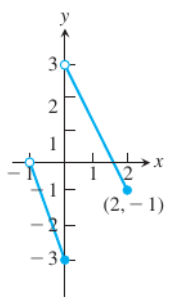
Click to see the solution
(a) Graph with three segments: This is a piecewise function defined on the interval.
- Segment 1 (
- Slope:
- Equation:
- Slope:
- Segment 2 (
- Segment 2 (Corrected,
- Slope:
- Equation:
- Let’s check the function from the image, starting from
- Segment 1 (
- Segment 2 (
- Slope:
(b) V-shape graph: This is an absolute value function that has been shifted and scaled.
- Vertex: The vertex is at
- Slope: For
- Equation: The standard absolute value function is
- The equation is
- The equation is
Answer:
4.5. Find a Composition of Functions (Lab 5, Task 5)
Obtain a formula for
Click to see the solution
(a)
- First, find
- Then, find
(b)
- First, find
- Then, find
Answer:
4.6. Find the Inverse of Functions (Lab 5, Task 6)
Find a formula for
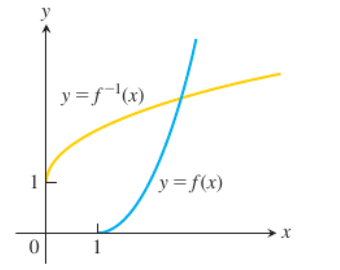
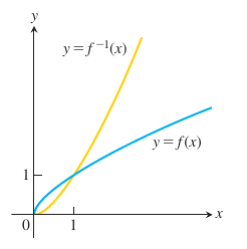
Click to see the solution
(a)
- Rewrite the function:
- Solve for x: Let
- Write the inverse:
(b)
- Solve for x: Let
- Raise both sides to the power of 3/2:
- Raise both sides to the power of 3/2:
- Write the inverse:
Answer:
4.7. Simplify Logarithmic Expressions (Lab 5, Task 7)
Use the properties of logarithms to write the following expressions as a single term:
Click to see the solution
(a)
- Use the quotient rule
(b)
- Use the product rule
(c)
- Use the power rule
- Use the quotient rule.
Answer:
4.8. Prove Angle Addition and Subtraction Identities (Lab 6, Task 1 & 2)
Prove the following trigonometric identities:
Click to see the solution
- Proof of
- This can be proven geometrically using the provided unit circle diagram or by using Euler’s formula (see next task).
- Proof of
- Use the identity for
- Since
- Use the identity for
- Proof of
- This identity can also be derived from the geometric diagram or Euler’s formula.
- Proof of
- Use the identity for
- Use the identity for
4.9. Derive Angle Addition Formulas using Euler’s Formula (Lab 6, Task 3)
Use Euler’s formula,
Click to see the solution
- Apply Euler’s Formula to A+B:
- Use Properties of Exponents: We can also write
- Expand the Product:
- Equate Real and Imaginary Parts: We now have two expressions for
- Real Part:
- Imaginary Part:
- Real Part:
4.10. Prove a Hyperbolic Double Angle Identity (Lab 6, Task 4)
Prove the hyperbolic identity:
Click to see the solution
- Start with the Right-Hand Side (RHS): Use the exponential definitions of
- RHS
- RHS
- Simplify the Expression:
- This is a difference of squares:
- Recognize the Result: The expression
- Conclusion: RHS = LHS.
4.11. Prove a Hyperbolic Identity (Lab 6, Task 5)
Prove that
Click to see the solution
- Start with the Left-Hand Side (LHS): Use the exponential definitions.
- LHS =
- LHS =
- Expand the Squares:
- Simplify:
- Recognize the Result: This is the definition of
- Conclusion: LHS = RHS.
4.12. Prove the Hyperbolic Sine Addition Formula (Lab 6, Task 6)
Prove the identity for hyperbolic sine addition:
Click to see the solution
- Start with the Right-Hand Side (RHS): Substitute the exponential definitions.
- RHS =
- RHS =
- Expand the Products:
- Simplify by Canceling Terms:
- Recognize the Result: This is the definition of
- Conclusion: RHS = LHS.
4.13. Derive the Logarithmic Form of Inverse Hyperbolic Cosine (Lab 6, Task 7)
Show that for
Click to see the solution
- Start with the definition: Let
- Use the exponential form:
- Form a quadratic equation:
- Multiply by
- Rearrange:
- Solve for
- Choose the correct root: The range of the
- For
- The other root,
- To ensure the function is one-to-one, the principal value is chosen, which corresponds to the positive root. So,
- For
- Take the logarithm:
4.14. Find the nth Term of a Sequence (Lab 6, Task 8)
For each sequence below, find a formula for the nth term
Click to see the solution
Let’s use the convention that
- This is an alternating sequence starting with a positive value.
- Formula:
- This is an alternating sequence starting with a negative value.
- Formula:
- These are the perfect squares.
- Formula:
- These are the perfect squares with alternating signs, starting positive.
- Formula:
- Numerator: The numerators are the cubes of the natural numbers,
- Denominator: The denominators are multiples of 3, given by
- Formula:
- Numerator: The numerators are the cubes of the natural numbers,
4.15. Find the Formula for an Arithmetic Sequence (Lab 7, Task 1)
Find the sequence function
Click to see the solution
- Identify the First Term: The first term of the sequence is
- Find the Common Difference: The common difference,
- Use the Formula for an Arithmetic Sequence: The formula for the
- Substitute the Values:
- Simplify the Expression:
4.16. Find the Formula for an Arithmetic Sequence (Lab 7, Task 2)
Given the first term
Click to see the solution
- Use the Formula for the n-th Term: We have
- Solve for the Common Difference (d):
- Write the General Formula: Substitute the values of
- Simplify the Expression:
4.17. Find a Sequence from its Sum (Lab 7, Task 3)
If the sum of the first
Click to see the solution
- Use the Relationship Between
- Calculate
- Find the First Term: The formula is valid for
- Verify the Formula for n=1: Check if the derived formula
4.18. Find the Formula for a Geometric Sequence (Lab 7, Task 4)
In a geometric sequence, the first term
Click to see the solution
- Use the Formula for the n-th Term: The formula for a geometric sequence is
- Solve for the Common Ratio (r):
- Write the General Formula: There are two possible sequences.
4.19. Find a Sequence from its Sum (Lab 7, Task 5)
The sum of the first
Click to see the solution
- Use the Relationship Between
- Calculate
- Find the First Term:
- Verify the Formula for n=1: Check if the derived formula
- Express in Standard Form:
4.20. Find the Closed Form of a Recurrence Relation (Lab 7, Task 6)
Find the sequence function
Click to see the solution
- Characteristic Equation: For a linear homogeneous recurrence relation
- Solve for the Roots:
- The roots are
- General Solution: The general form of the solution is
- Use Initial Conditions to Find Constants:
- For
- For
- For
- Solve the System:
- Subtracting the second equation from the first:
- Substitute back into the first equation:
- Subtracting the second equation from the first:
- Write the Closed Form:
4.21. Analyze the Babylonian Method (Lab 7, Task 7)
Consider the sequence
- The sequence is decreasing for
- The sequence converges to
Click to see the solution
(a) Prove
- Use AM-GM Inequality: The Arithmetic Mean-Geometric Mean (AM-GM) inequality states that for non-negative numbers,
- Apply to the sequence: For any
- This shows that for any
(b) Prove the sequence is decreasing for
- We need to show that
- Consider the difference
- From part (a), we know that for
- Therefore,
- Since the numerator is non-positive and the denominator is positive, the whole expression is non-positive. Thus,
(c) Prove the sequence converges to
- Apply Monotone Convergence Theorem: We have shown that the sequence is decreasing (for
- Find the Limit: Take the limit of both sides of the recurrence relation:
- Since
- Solve for L:
- Since all terms
4.22. Find Limits of Exponential Sequences (Lab 7, Task 8)
Find the limits of the following sequences as
Click to see the solution
We use the well-known limit definition of
(a)
- Rewrite the expression: We want the exponent to match the denominator inside the parenthesis.
- Take the limit:
- Apply the definition of e: As
- The limit is
- The limit is
(b)
- Rewrite the expression: Use the properties of exponents.
- Take the limit:
- Apply the definition of e: The limit of the expression inside the brackets is
- The limit is
- The limit is
(c)
- Rewrite the expression:
- Apply the general formula: This is in the form
- Take the limit: The limit is
Answer:
4.23. Find Limits of Various Sequences (Lab 8, Task 1)
Find the limits of the following sequences:
Click to see the solution
(a)
- Simplify the expression: First, simplify the factorial term.
- The expression becomes:
- Rewrite the base: The base can be rewritten to use the definition of
- Evaluate the limit: The limit is now in a familiar form.
- We can adjust the exponent to match the denominator:
- The inner part,
- The exponent,
- Therefore, the limit is
- Answer:
(b)
- Use the Sum Rule for Limits: We can evaluate the limit of each term separately.
- Limit of the first term:
- Limit of the second term:
- The denominator is
- The limit of the inner part is
- So the denominator’s limit is
- The limit of the second term is
- The denominator is
- Combine the results: The total limit is
- Answer:
- Answer:
(c)
- Use the Sum Rule for Limits: We can evaluate the limit of each term separately.
- Limit of the first term:
- Using the ratio test for sequences, for
- Using the ratio test for sequences, for
- Limit of the second term: This is the limit of a product:
- The first factor,
- The second factor is
- The limit of the product is
- The first factor,
- Combine the results: The total limit is
- Answer: 0.
4.24. Analyze a Recursively Defined Sequence (Lab 8, Task 2)
Let
- Prove by induction that
- Show that the sequence is decreasing.
- Show that the sequence converges by finding its limit.
Click to see the solution
(a) Prove by induction that
- Base Case (n=1): We are given
- Inductive Step: Assume that for some integer
- Starting with the inductive hypothesis,
- This implies
- Taking the reciprocal reverses the inequality:
- Multiplying by 2:
- Multiplying by -1 reverses the inequality again:
- Adding 2 to all parts:
- This simplifies to
- Since
- Starting with the inductive hypothesis,
- Conclusion: By the principle of mathematical induction,
(b) Show that the sequence is decreasing
- To show the sequence is decreasing, we need to prove that
- Consider the expression for the difference:
- From part (a), we know
- Let’s prove by induction that
- Base Case (n=1):
- Inductive Step: Assume
- Thus,
- Base Case (n=1):
- Since
- Conclusion: Since the numerator is non-positive and the denominator is positive,
(c) Find the limit of the sequence
- Establish Convergence: In part (b) we showed the sequence is decreasing. In part (a) we showed it is bounded below by 1 (and more specifically by
- By the Monotone Convergence Theorem, a sequence that is monotone (decreasing) and bounded must converge to a limit. Let’s call this limit
- Solve for the Limit: We can take the limit of both sides of the recurrence relation:
- Since
- Now, we solve this equation for
- Since we proved in part (a) that all terms of the sequence are
- Conclusion: The limit of the sequence is
4.25. Prove a Limit by Definition (Chapter 3, Example 1)
Prove by the
Click to see the solution
- Set up the inequality: For any given
- Simplify the expression:
- Solve for
- For
- For
- Choose N: We can choose
- Let
- Let
- Conclusion: For any
4.26. Apply the Ratio Test for Sequences (Chapter 3, Example 2)
Show that
Click to see the solution
- Let
- Form the Ratio: Consider the limit of the absolute value of the ratio of consecutive terms:
- Simplify the Expression:
- Evaluate the Limit:
- Conclusion: Since the limit of the ratio is
4.27. Prove Monotonicity and Boundedness of a Sequence (Chapter 3, Example 3)
Consider the sequence
- Prove that this sequence is increasing.
- Prove that this sequence is bounded by 3.
- Based on the above, find the limit of the sequence.
Click to see the solution
(a) Prove the sequence is increasing
- We use mathematical induction to prove
- Base Case (n=1):
- Inductive Step: Assume
- Start with the assumption:
- Add 5 to both sides:
- Divide by 3:
- By definition, this is
- Start with the assumption:
- Conclusion: The sequence is increasing for all
(b) Prove the sequence is bounded by 3
- We use induction to prove
- Base Case (n=1):
- Inductive Step: Assume
- Start with the assumption:
- Add 5 to both sides:
- Divide by 3:
- Since
- Start with the assumption:
- Conclusion: The sequence is bounded above by 3.
(c) Find the limit
- Since the sequence is increasing and bounded above, the Monotone Convergence Theorem guarantees that a limit exists. Let’s call the limit
- Take the limit of both sides of the recursive formula:
- Since
- Solve for L:
4.28. Prove a Limit by Definition (Chapter 3, Example 4)
Prove by the
Click to see the solution
- Set up the inequality: For any given
- Simplify the expression: Multiply by the conjugate.
- Find an upper bound and solve for
- We want to find
- Choose N: We can choose
- Let
- Let
- Conclusion: For any
4.29. Prove a Classical Sequence Limit (Chapter 3, Example 5)
Prove by definition that
Click to see the solution
- Set up the
- Solve the inequality for n:
- Since
- Choose N: Let us choose
- Conclusion: For any given
4.30. Apply the Ratio Test for Sequences (Chapter 3, Example 6)
Show that
Click to see the solution
- Let
- Form the Ratio: Consider the limit of the absolute value of the ratio of consecutive terms:
- Simplify the Expression:
- Evaluate the Limit:
- Conclusion: We are given that
4.31. Analyze a Sequence Defined by a Sum (Chapter 3, Example 7)
Let
Click to see the solution
- Rewrite the General Term: Use partial fraction decomposition on the term inside the sum. The identity is
- Expand the Sum: The sum becomes a telescoping series:
- All intermediate terms cancel out, leaving
- Show the Sequence is Bounded:
- Since
- This means
- So,
- Since
- Show the Sequence is Increasing:
- Consider
- Since
- Consider
- Find the Limit: Since the sequence is increasing and bounded, the limit exists. We can find it from the simplified formula.
4.32. Prove the Limit of a Geometric Sequence (Chapter 3, Example 8)
Prove by definition that if
Click to see the solution
- Handle the trivial case: If
- Use Bernoulli’s Inequality: Assume
- By Bernoulli’s inequality,
- Therefore,
- Solve for
- Choose N: Let
- Conclusion: For any
4.33. Prove Another Classical Sequence Limit (Chapter 3, Example 9)
Prove that
Click to see the solution
- Set up the proof: Let
- Use the Binomial Theorem: From our setup, we have
- By the Binomial Theorem, for
- Find an inequality: Since all terms in the expansion are positive, we can take just one term to form an inequality. Let’s use the term with
- Solve for
- This gives
- This gives
- Apply the Squeeze Theorem: We have established the inequality
- Conclusion: Since
4.34. Analyze Limits of the Form
Let
Click to see the solution
- Case 1:
- If
- If
- If
- If
- Case 2:
- Let
- Since
- Let
- Case 3:
- Let
- From Case 2, we know that the magnitude of the terms,
- The sequence alternates between large positive and large negative values. An oscillating, unbounded sequence does not converge. Therefore, the limit does not exist.
- Let
4.35. Prove a Sequence Diverges (Chapter 3, Example 11)
Show that the sequence
Click to see the solution
- Assume the opposite (Proof by Contradiction): Assume the sequence converges to some limit
- Use the Definition of a Limit: By definition, for any
- Choose a specific
- Analyze the terms: For
- This means we must have
- This means we must have
- Use the Triangle Inequality to find a contradiction: Consider the distance between the terms 1 and -1.
- By the triangle inequality,
- Using our inequalities from step 4:
- Conclusion: We have arrived at the statement
4.36. Prove a Limit for a Recursively Defined Sequence (Chapter 3, Example 12)
Prove that
Click to see the solution
- Case 1:
- Case 2:
- Raise both sides to the power of
- By Bernoulli’s inequality,
- Therefore,
- By the Squeeze Theorem, since
- Raise both sides to the power of
- Case 3:
- Consider the limit
- From Case 2, since
- Using the quotient rule for limits,
- Consider the limit
- Conclusion: In all cases, the limit is 1.
4.37. Prove the Ratio Test for Sequences (Chapter 3, Example 13)
Let
- If
- If
Click to see the solution
(1) Proof for L < 1
- Use the definition of the limit: Since the limit is
- By the definition of the limit of a sequence, there exists an integer
- This implies
- From this, we can write a series of inequalities:
- In general, for any
- Apply the Squeeze Theorem: We have the inequality
- By the Squeeze Theorem,
(2) Proof for L > 1
- Use the definition of the limit: Since the limit is
- There exists an integer
- This gives
- As before, this leads to the general inequality
- Conclusion: Since
4.38. Prove a Limit Diverges to Infinity (Chapter 3, Example 14)
Prove by the definition of divergence that
Click to see the solution
- Definition of Divergence to
- Set up the inequality:
- Solve for
- Choose N: Let
- Conclusion: For any
4.39. Prove a Limit Diverges to Infinity (Chapter 3, Example 15)
Prove by the definition of divergence that
Click to see the solution
- Set up the inequality: For any
- Find a simpler lower bound:
- For
- Therefore,
- For
- Solve for
- Choose N: Let
- Conclusion: For any
4.40. Show that a Sequence is Bounded (Chapter 3, Example 16)
Show that the sequence with general term
Click to see the solution
- Find a Lower Bound:
- For
- The denominator
- Therefore,
- For
- Find an Upper Bound:
- We can rewrite the expression using algebraic manipulation:
- Since
- Therefore,
- Conclusion: Since
4.41. Show that a Sequence is Bounded (Chapter 3, Example 17)
Show that the sequence with general term
Click to see the solution
- Find an Upper Bound: We can find a simpler expression that is larger than
- For the numerator, we can say
- For the denominator, we can say
- For the numerator, we can say
- Combine the Inequalities:
- Find a Lower Bound:
- For
- For
- Conclusion: Since
4.42. Show that a Sequence is Unbounded (Chapter 3, Example 18)
Show that the sequence with general term
Click to see the solution
- Use the Definition of an Unbounded Sequence: We need to show that for any arbitrary positive number
- Simplify the Expression: For
- Set up the Inequality: We want to find an
- Choose N: Let us choose
- Conclusion: For any
4.43. Analyze the Boundedness and Divergence of a Sequence (Chapter 3, Example 19)
Consider the sequence
Click to see the solution
- Prove the sequence is unbounded:
- To show the sequence is unbounded, we must show that for any large number
- Consider the absolute value of the terms:
- Let
- Let us choose
- Thus, the sequence is unbounded.
- To show the sequence is unbounded, we must show that for any large number
- Prove the sequence does not diverge to
- A sequence diverges to
- A sequence diverges to
- The terms of this sequence are
- The sequence contains infinitely many positive terms (for even
- Therefore, it cannot diverge to
- A sequence diverges to
4.44. Prove the Formula for the Sum of a Geometric Sequence (Chapter 3, Example 20)
Prove by mathematical induction that the sum of the first
Click to see the solution
Let
- Base Step (n=1):
- The formula gives
- The statement
- Inductive Step:
- Assumption (Inductive Hypothesis): Assume
- Goal: Prove that
- Proof:
- Using the inductive hypothesis:
- This proves
- Assumption (Inductive Hypothesis): Assume
- Conclusion: By the principle of mathematical induction, the formula is true for all
4.45. Prove that a Convergent Sequence Has a Unique Limit (Chapter 3, Example 21)
Prove that if a sequence converges, its limit is unique.
Click to see the solution
- Assume the opposite (Proof by Contradiction): Assume that a sequence
- Use the Definition of a Limit:
- Since
- Since
- Since
- Choose a suitable
- Use the Triangle Inequality to find a contradiction:
- Consider the distance between the limits:
- We can write this as
- By the triangle inequality,
- Since
- So,
- Consider the distance between the limits:
- Apply the limit definition: For
- Conclusion: We started by defining
4.46. Prove that a Convergent Sequence is Bounded (Chapter 3, Example 22)
Prove that if a sequence
Click to see the solution
- Use the Definition of Convergence: Let the sequence
- Choose a specific
- Bound the “tail” of the sequence: The inequality
- Bound the entire sequence: The entire sequence consists of two parts: the “head”
- The head is a finite set of numbers.
- The tail is bounded between
- Construct the overall bounds: Let
- Conclusion: For any term
4.47. Prove an Inequality Equivalence Lemma (Chapter 3, Example 23)
Prove that for any two real numbers
Click to see the solution
- Prove the forward direction (
- Assume
- Since
- By transitivity, from
- Assume
- Prove the backward direction (
- Assume that
- Assume the opposite of what we want to prove, i.e., assume
- Let’s choose a specific positive value for
- Substitute this specific
- This simplifies to
- This is a contradiction. Therefore, our assumption that
- Since
- Assume that
4.48. Prove the Comparison Theorem for Sequences (Chapter 3, Example 24)
Let
Click to see the solution
- Let
- Assume the opposite: Assume that
- Use the Definition of a Limit:
- Since
- Since
- Since
- Find the Contradiction: Let
- From the limit of
- From the limit of
- Substitute
- This implies that for
- From the limit of
- Conclusion: This contradicts the given condition that
4.49. Prove the Sandwich (Squeeze) Theorem (Chapter 3, Example 25)
Let
Click to see the solution
- Let
- Use the Definition of a Limit: Since
- For all
- For all
- For all
- Combine the Conditions: Let
- Apply the Squeeze: For any
- Conclusion: The combined inequality directly implies that
4.50. Apply the Sandwich Theorem (Chapter 3, Example 26)
Find the limits of the following sequences using the Sandwich Theorem or its corollary:
Click to see the solution
(a)
- The sine function is bounded:
- For
- We know that
- By the Sandwich Theorem, since the sequence is squeezed between two sequences that both converge to 0, its limit must also be 0.
- Answer: 0.
(b)
- The cosine squared function is bounded:
- For
- We know that
- By the Sandwich Theorem, the limit must be 0.
- Answer: 0.
(c)
- We use the corollary: if
- Let
- Let
- We know that
- By the corollary, the limit of
- Answer: 0.
4.51. Prove the Limit Laws (Chapter 3, Example 27)
Let
Click to see the solution
- Statement of the Limit Laws:
- Sum Rule:
- Constant Multiple Rule:
- Product Rule:
- Quotient Rule:
- Sum Rule:
- Proof of the Sum Rule:
- Let an arbitrary
- Since
- Similarly, since
- Let
- Using the triangle inequality:
- For
- This completes the proof.
- Let an arbitrary
4.52. Prove the Constant Multiple Rule for Limits (Chapter 3, Example 28)
Prove the Constant Multiple Rule for limits: If
Click to see the solution
- Case 1:
- If
- The right side of the equation is
- The statement holds.
- If
- Case 2:
- Let an arbitrary
- First, manipulate the expression:
- Since
- There exists an integer
- Now, for all
- This completes the proof.
- Let an arbitrary
4.53. Prove the Formula for the Sum of an Arithmetic Sequence (Chapter 3, Example 29)
Prove by mathematical induction that the sum of the first
Click to see the solution
Let
- Base Step (n=1):
- The formula gives
- The statement
- Inductive Step:
- Assumption (Inductive Hypothesis): Assume
- Goal: Prove that
- Proof:
- Using the inductive hypothesis:
- Substitute
- This proves
- Assumption (Inductive Hypothesis): Assume
- Conclusion: By the principle of mathematical induction, the formula is true for all
4.54. Prove the Quotient Rule for Limits (Chapter 3, Example 30)
Prove the Quotient Rule for limits: If
Click to see the solution
- Strategy: The proof can be done in two parts. First, prove that
- Part 1: Prove
- Let
- Since
- Since
- Let
- This proves
- Let
- Part 2: Apply the Product Rule.
- As established in the strategy, since both
- As established in the strategy, since both
4.55. Apply Limit Laws to Evaluate Limits (Chapter 3, Example 31)
Evaluate the following limits using the properties of limits:
Click to see the solution
(a)
- Use the Constant Multiple Rule:
- Apply the rule:
- Use the known limit: We know that
- Calculate:
- Answer: 0.
(b)
- Use Constant Multiple and Product Rules:
- Calculate:
- Answer: 0.
(c)
- Divide by the highest power of n: Divide both the numerator and the denominator by
- Apply the Limit Laws (Sum, Quotient, Constant):
- Evaluate: Since limits of terms like
- Answer:
4.56. Prove Limit Involving Square Root (Chapter 3, Example 32)
Prove that if a sequence
Click to see the solution
- Case 1:
- Then
- Then
- Case 2:
- Consider the expression:
- Since
- Therefore,
- This gives us the inequality:
- Consider the expression:
- Apply the limit definition: Since
- Conclusion: For
4.57. Prove Limit Involving Absolute Value (Chapter 3, Example 33)
Prove that if a sequence
Click to see the solution
- Use the Reverse Triangle Inequality: For any two real numbers
- Apply to the sequence: Let
- Use the Squeeze Theorem: We have established the inequality
- Take the Limit: We are given that
- Conclusion: The sequence
4.58. Prove the Cauchy Criterion for Convergence (Chapter 3, Example 34)
Prove that a sequence of real numbers is a Cauchy sequence if and only if it converges.
Click to see the solution
- Prove (
- Assume the sequence
- By definition, for any
- Now, consider any two integers
- We want to show
- Using the triangle inequality:
- Since both
- This is the definition of a Cauchy sequence.
- Assume the sequence
- Prove (
- Step A: Show a Cauchy sequence is bounded. A previous theorem shows this. For
- Step B: Apply Bolzano-Weierstrass. Since
- Step C: Show the original sequence converges to L. A previous theorem shows that a Cauchy sequence that has a convergent subsequence is itself convergent (to the same limit). For any
- Step A: Show a Cauchy sequence is bounded. A previous theorem shows this. For
4.59. Prove the Monotone Convergence Theorem (Chapter 3, Example 35)
Prove that a monotone sequence is bounded if and only if it is convergent. Furthermore:
- If
- If
Click to see the solution
- Prove (
- Prove (
- Let’s prove the case where
- Since the set of terms
- We will prove that
- Let
- Since the sequence is increasing, for any
- Also, since
- Combining these inequalities for
- This implies
- This holds for all
- The proof for a decreasing sequence bounded below is similar, using the infimum.
- Let’s prove the case where
4.60. Analyze Subsequences and Convergence (Chapter 3, Example 36)
State and prove the theorem relating the convergence of a sequence to its subsequences.
Click to see the solution
- Theorem Statement: If a sequence
- Proof:
- Assume that the sequence
- Let
- From the definition of convergence of
- Since the indices
- Therefore, we can find an integer
- Conclusion: For all
- This is precisely the definition that the subsequence
- Assume that the sequence
4.61. Prove Properties of Subsequences and Convergence (Chapter 3, Example 37)
Prove that if a sequence
Click to see the solution
- Assume Convergence: Let the sequence
- Use the Definition of Convergence: By definition, for any arbitrary
- Consider a Subsequence: Let
- Find the Corresponding Index for the Subsequence: Since
- Conclusion: For all
4.62. Prove the Bolzano-Weierstrass Theorem (Chapter 3, Example 38)
Prove that every bounded sequence of real numbers has a convergent subsequence.
Click to see the solution
- Set up the Proof: Let
- Case 1: S is a finite set.
- If the sequence can only take a finite number of distinct values, but has infinitely many terms, then at least one of these values must be repeated infinitely many times.
- Let this value be
- A constant sequence is convergent and its limit is the constant value itself, so we have found a convergent subsequence.
- Case 2: S is an infinite set.
- Since the sequence
- The Bolzano-Weierstrass theorem for sets states that every bounded, infinite set of real numbers has at least one accumulation point (or limit point). Let
- Since the sequence
- Construct a Convergent Subsequence:
- By the definition of an accumulation point, any open interval centered at
- For
- For
- Continuing this process, for any integer
- By the definition of an accumulation point, any open interval centered at
- Conclusion: The subsequence
4.63. Prove that a Cauchy Sequence is Bounded (Chapter 3, Example 39)
Prove that every Cauchy sequence of real numbers is bounded.
Click to see the solution
- Use the Definition of a Cauchy Sequence: Let
- Choose a specific
- Bound the “tail” of the sequence: Fix one particular index, for example,
- Apply the Reverse Triangle Inequality: We know that
- Combine the inequalities: For all
- Bound the entire sequence: The sequence consists of the “head”
- The head is a finite set of numbers, so it is bounded. Let its maximum absolute value be
- The head is a finite set of numbers, so it is bounded. Let its maximum absolute value be
- Find the overall bound: Let
4.64. Prove a Property of Cauchy Sequences (Chapter 3, Example 40)
Prove that a Cauchy sequence that has a convergent subsequence is itself convergent.
Click to see the solution
- Set up the Proof: Let
- Use the Definitions: Let an arbitrary
- Since
- Since the subsequence
- Since
- Connect the two conditions: Since the indices
- Use the Triangle Inequality: Now, for any
- We can write this as
- By the triangle inequality, this is
- We can write this as
- Apply the Bounds:
- Since both
- Since we chose
- Since both
- Conclusion: Therefore, for any
4.65. Prove the Product Rule for Limits (Chapter 3, Example 41)
Prove the Product Rule for limits: If
Click to see the solution
- Set up the Proof: We want to show that for any
- Use an Algebraic Trick: Add and subtract a term inside the absolute value.
- Apply the Triangle Inequality:
- Bound the Terms:
- Since the sequence
- Since
- Since
- Since the sequence
- Combine the Conditions: Let
- Conclusion: Since
- Therefore,
- This completes the proof.
- Therefore,
4.66. Find Square Roots of a Complex Number (Midterm, Task 1.1)
Find the square roots of the complex number
Click to see the solution
- Convert to Trigonometric Form:
- Modulus (r):
- Argument (
- So,
- Modulus (r):
- Use the Root Formula: The n-th roots are given by
- Here,
- Here,
- Calculate the Root for k=0:
- Calculate the Root for k=1:
- This is the negative of the first root.
4.67. Solve a Quadratic Equation in C (Midterm, Task 1.2)
Solve in
Click to see the solution
- Use the Quadratic Formula:
- Calculate the Discriminant (
- Find the Square Roots of the Discriminant: We need to find the square roots of
- The square roots are
- Find the Solutions for x:
4.68. Prove an Inequality by Induction (Midterm, Task 2.1)
Let
Click to see the solution
Let
- Base Step (n=1):
- LHS =
- RHS =
- The inequality is
- LHS =
- Inductive Step:
- Assumption (Inductive Hypothesis): Assume
- Goal: Prove
- Proof:
- Using the inductive hypothesis:
- We now need to prove that
- Since both sides are positive, we can square them:
- Cross-multiply:
- This simplifies to
- Since all steps are valid, we have proven that
- Assumption (Inductive Hypothesis): Assume
- Conclusion: By the principle of mathematical induction, the inequality holds for all
4.69. Find the Limit of a Sequence (Midterm, Task 2.2)
Find
Click to see the solution
- Establish Bounds:
- From the previous task, we have the inequality
- Since all factors in the numerator and denominator are positive, we also have
- From the previous task, we have the inequality
- Combine the Bounds: We have
- Apply the Squeeze (Sandwich) Theorem:
- We can evaluate the limits of the bounding sequences.
- Conclusion: Since the sequence
4.70. Invertibility and Inverse Functions (Midterm, Task 3)
Consider the function
- Determine the largest interval
- Sketch the graph of
- Find the explicit expression for the inverse function
Click to see the solution
- Analyze the Piecewise Function: We analyze the expression inside the square root based on the absolute values.
- Case 1 (
- Case 2 (
- Case 3 (
- The function is:
- Case 1 (
- Determine Invertibility: A function is invertible if it is one-to-one (passes the horizontal line test). The function is constant for
- The largest interval
- The largest interval
- Sketch the Graph on
- At
- At
- The graph is the top half of a sideways parabola, starting at
- At
- Find the Inverse: Let
- Solve for
- The inverse function is
- Solve for
Answer:
- The largest interval is
- The graph on this interval is a curve from point
- The inverse is
4.71. Prove a Limit by Definition (Midterm, Task 4.1)
Consider the sequence defined by
Click to see the solution
- Set up the
- Simplify the Expression:
- Since
- Solve the Inequality for n:
- We want to find
- We want to find
- Choose N: We must choose an integer
- Let
- Let
- Conclusion: For any
4.72. Calculate N for a Given Precision (Midterm, Task 4.2)
How many steps
Click to see the solution
- Use the Inequality from the Previous Task: We need to find the smallest integer
- Substitute
- Solve for n:
- Determine the Smallest Integer N: The condition must hold for all terms after N. So if we need
4.73. Boundedness of Convergent Sequences (Midterm, Task 5)
- Prove that a convergent sequence is bounded.
- What is about the converse, is it true or not? Why?
Click to see the solution
1. Proof that a convergent sequence is bounded:
- Use the Definition of Convergence: Let the sequence
- Choose a specific
- Bound the “tail” of the sequence: The inequality
- Bound the entire sequence: The entire sequence consists of two parts: the “head”
- The head is a finite set of numbers, so it is bounded.
- The tail is bounded between
- Construct the overall bounds: Let
- Conclusion: For any term
2. The Converse Statement:
- Statement: The converse is “If a sequence is bounded, then it is convergent.”
- Truth Value: This statement is false.
- Reason (Counterexample): A bounded sequence does not have to converge. The classic counterexample is the sequence